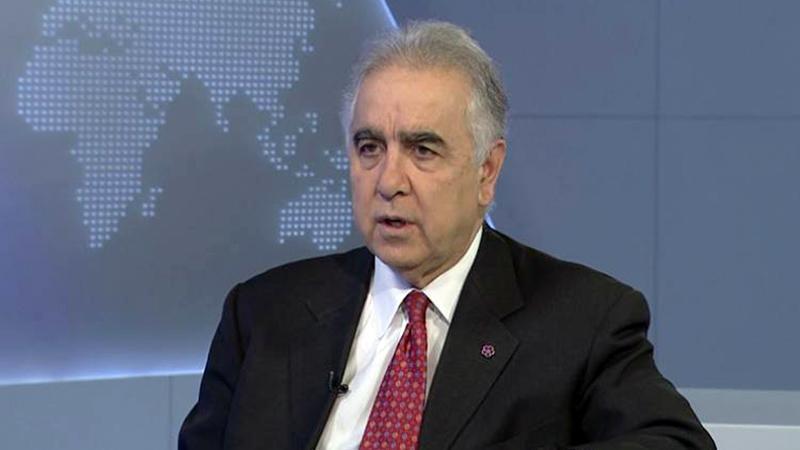
The Sunset of Theocracy and the Crisis of Accountability: Azat Arshakyan on the New Global Order
12-03-2026 18:15:19 | Armenia | Interviews
In a wide-ranging and provocative interview on Noyan Tapan, former Supreme Council deputy and prominent public figure Azat Arshakyan delivered a sobering assessment of the shifting tectonic plates in Middle Eastern geopolitics and the internal stagnation of Armenian politics. Speaking with the characteristic bluntness of a veteran statesman, Arshakyan argued that the era of theocratic dominance in Iran is drawing to a close and that Armenia’s own political class is trapped in a "suicidal" cycle of recycling its "toxic past".
The "Anachronism" of Modern Iran
Addressing the escalating tensions involving Iran, Israel, and the United States, Arshakyan dismissed the notion that the current crisis is a surprise. "For some, even the sunset is a surprise," he remarked, suggesting that the Islamic Republic has fundamentally "exhausted its function". According to Arshakyan, the theocratic model established in the 1970s was always an "anachronism"—a medieval Sharia-based system imposed on a secularizing population—that has now become an obstacle to regional progress.
Historically, the West viewed Iran as a necessary counterweight to the Arab world and Turkey. However, Arshakyan posits that this strategic necessity has vanished. "The Arab world has modernized so much—the Gulf states are now secular, modern nations—that the West is no longer worried about a caliphate," he explained. With the modernization of Saudi Arabia and the fragmentation of Iraq, Arshakyan argues that a militant, expansionist Iran no longer serves a global purpose and has instead become a "dangerous circumstance" that destabilizes its neighbors.
Human Rights and the Mandate for Intervention
A central pillar of Arshakyan’s argument is the moral and legal justification for international intervention in Iran. He pointed to the "3,000 victims" among peaceful protesters and the regime’s practice of public executions as a trigger for action.
"The UN Charter allows for intervention without explicit permission in cases of urgent humanitarian crisis," Arshakyan claimed, arguing that the protection of human rights and the rights of women overrides traditional notions of sovereignty when a regime begins "executing its own people for not wearing a headscarf". He suggested that any of the five permanent members of the UN Security Council have the legal standing to facilitate a change of power to protect civilian lives.
The "Reconquista" and the Vance Visit
Arshakyan linked these regional shifts to a broader ideological movement in the West, which he described as a "Reconquista"—a repatriation of Christian and Jewish populations to their ancestral homelands. He noted the significance of U.S. political figures like Donald Trump and JD Vance in this context.
Recalling Vance’s visit to Armenia, Arshakyan quoted the U.S. politician as saying, "I have come as a Christian to a Christian country". This ideology, Arshakyan argues, aligns with a worldview where the "right to a homeland" for Armenians, Assyrians, and Jews is a central geopolitical priority, directly clashing with the "theocratic expansionism" of the Iranian regime.
Turning to domestic affairs, the tone of the interview grew even more critical. Arshakyan lamented that Armenia remains "stuck in place," unable to move past the figures of the "toxic past," such as Robert Kocharyan and Gagik Tsarukyan. He described the current political landscape as a "closed circle" where society is offered no real alternative.
"The government is committing suicide and taking us with it," Arshakyan warned, criticizing the lack of accountability since the 2018 revolution. He expressed frustration that the "hammer"—a symbol of justice used by Prime Minister Nikol Pashinyan—has failed to deliver actual verdicts. "I want to see the verdict... the criminal must be punished," he insisted, arguing that building kindergartens and roads is a basic duty, not a substitute for the rule of law and the punishment of past corruption.
Conclusion: A Call for Cultural and Political Purity
In a final, sharp critique of the national state of mind, Arshakyan called for the legal banning of "rabiz" culture and the corruption of the Armenian language, which he views as symptoms of a declining state. For Arshakyan, the path forward requires more than just economic management; it requires a clean break from the "toxic" figures of the past and a firm commitment to international standards of human rights and justice.
As the sun sets on old regional orders, the guest of Noyan Tapan leaves the audience with a stark choice: modernize and demand true accountability, or continue the slow "suicide" of the state





 ENGLISH
  Հայերեն
 Русский
 Դաս. հայերեն
 French