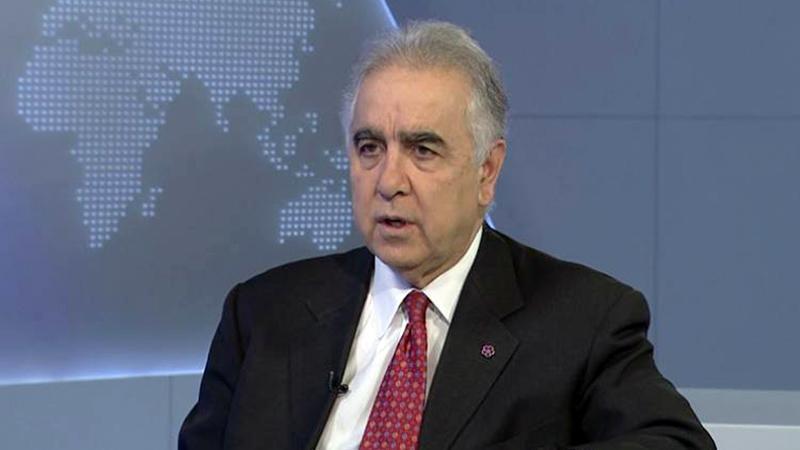
The Architecture of a Global Crisis: Analyst Karen Sargsyan on the Middle East Flashpoint and Regional Repercussions
12-03-2026 18:59:24 | Armenia | Interviews
In a recent and wide-ranging discussion on Noyan Tapan, Karen Sargsyan, sociologist, analyst, and President of the Euro-Atlantic Integration Platform, provided a sobering assessment of the escalating conflict between the United States and Iran. Sargsyan’s analysis suggests that the current military campaign, characterized by high-stakes strikes and significant strategic losses, is unfolding far differently than its architects in Washington and Tel Aviv had anticipated.
Opening the session, Sargsyan was quick to label the current hostilities as a departure from established democratic norms. He characterized the military actions as "illegal and unconstitutional," noting that Donald Trump initiated the conflict without prior congressional approval. "According to many American analysts, this war is illegal," Sargsyan stated, emphasizing that Congress only provided a retroactive authorization nearly a week after hostilities had already commenced.
The analyst drew a sharp comparison between Trump’s strategy and that of Vladimir Putin, suggesting both leaders fell into the trap of overestimating their military reach. He noted that the expectation was a swift resolution—a "two to three-day" operation—where the removal of the Iranian leadership would lead to being "greeted with flowers". Instead, Sargsyan argued, the reality on the ground has mirrored the "quagmire" of other failed modern operations.
Beyond the rhetoric, Sargsyan detailed the heavy material costs of the conflict. He cited the destruction of a radar system in Qatar valued at over $1 billion, which served as a critical node for long-distance monitoring as far as China. "It wasn't just units that were hit," Sargsyan explained, "but communication and radar hubs throughout the Persian Gulf".
The fallout has extended to global energy security. Sargsyan reported that the Strait of Hormuz has become a site of economic devastation, with more than ten tankers damaged or destroyed, including an American tanker attempting to export Iraqi oil. Perhaps most tellingly of the chaos, he pointed to reports of "friendly fire" incidents, where three F-15 aircraft were allegedly downed because allied Kuwaiti systems failed to identify them as friendly, signaling a systemic breakdown in the coalition.
The Human Cost and the "Information War"
The conflict's humanitarian impact has been equally grim. Sargsyan detailed a strike on a high-level meeting that resulted in the death of an Iranian leader and several generals, but also took a heavy toll on civilians. He cited reports of a strike on a school that killed young girls aged 7 to 10, as well as the death of a 12 to 14-month-old grandchild of the Iranian leadership.
"The information war is even heavier than the physical one," Sargsyan remarked, criticizing some Armenian media outlets for dismissing these reports as "fake". He warned that ignoring such realities, especially when they are being discussed by U.S. Senators themselves, is a disservice to the public.
Geopolitical Motivations: Gas and Diplomacy
A significant portion of Sargsyan’s analysis focused on the underlying motivations for the regional expansion. He argued that Israel’s move into southern Lebanon, ostensibly to counter Hezbollah, is actually a strategic play for massive natural gas fields. Specifically, he mentioned the "Goliath" (Leviathan) gas field, 80% of which belongs to Lebanon under international law. "They need to occupy southern Lebanon to seize these gas fields," Sargsyan claimed, asserting that "there is no talk of morality there".
He further asserted that Trump’s administration has increasingly acted in the interests of Israeli Prime Minister Benjamin Netanyahu, even at the cost of dismantling key U.S. counter-intelligence units that had previously vetoed operations against Iran.
Regional Fallout: Azerbaijan and Armenia
The crisis is already reaching the borders of the Caucasus. Sargsyan highlighted that Azerbaijan is actively mobilizing its reserves and has begun withdrawing its embassy from Tehran and its consulate from Tabriz, signaling an expectation that the situation could change "at any second".
Regarding Armenia's own path, the discussion touched upon the skepticism surrounding current integration efforts. Sargsyan alluded to the "double knots" of current agreements, suggesting that after four years of "yearly updated contracts," the tangible results for Armenia remain questionable. As the Middle East continues to burn, the analyst's insights on Noyan Tapan serve as a reminder that Armenia remains in a precarious position, caught between global giants and shifting regional alliances.







 ENGLISH
  Հայերեն
 Русский
 Դաս. հայերեն
 French