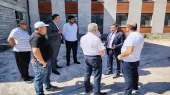
1in.am Suren Papikyan has been almost constantly on inspection visits in recent weeks. On September 8, he visited several training military units and centers, monitored the training process, visited UAV and communication troops training centers, and got acquainted with the personnel's preparedness and service conditions. Days before that, he also conducted an inspection visit to combat positions. The official page of the Ministry of Defense has recorded several such visits in recent months, including "unexpected" ones.
It is hard to object to them. The minister must go to the military unit, see the real conditions, talk to the servicemen, and demand results, but there is a more important question here.
How long should the minister's personal inspection remain one of the important tools for understanding the real state of the army? An unexpected visit is an additional tool for good governance, but it cannot be the governance system itself.
If discipline only improves when the minister's car can enter the military unit, then the problem is not the minister's infrequent visits. The problem is that the system still lacks self-operating control, measurable accountability, and a command culture where proper work does not depend on the presence of a high-ranking leader.
The real success of military reform will be the day when Suren Papikyan can go months without visiting any military unit but confidently know the real state of combat readiness, food, training, discipline, and equipment there.
By the way, Armenia has a concept for the transformation of the army, published back in 2024. The Ministry of Defense still presents this document as the basis for reforms today, and changes in military education have also been presented to European partners. So the question is what kind of army is being born from that concept in real life.
What will the Armenian army look like in ten years— a large conscription army, a small, high-tech professional force, a nationwide defense system built on reserves, or perhaps a combination of these?
And most importantly, what will a person gain from the army when they finish their service?
In this regard, the Israeli experience is very instructive, although it cannot be mechanically copied. The technological units of the Israeli army have long become a source of human capital for the country's technological economy. Former servicemen from Unit 8200 and other technological units leave the army with real experience in cybersecurity, data processing, software solutions, and intelligence technologies. Many of them later enter the private sector or start companies. Israeli government sources even openly describe the army as a locomotive pulling the technological economy. This means that the army there is not just a consumer; it also produces knowledge.
This can be much more important for Armenia than simply wanting to replicate the "Israeli army model." A small state cannot take a young person’s year and a half of life and return them to civilian life after service without new knowledge, a profession, and applicable skills.
A person who has completed their service must be more valuable to the economy as well— with technical expertise, language skills, real skills in communication systems, UAVs, cybersecurity, logistics, medical assistance, or management.
Singapore is developing mandatory service in this direction. Servicemen can earn educational credits and professional qualifications during their service, and starting in 2026, the skills they acquire will be included in an officially recognized "career and skills passport," so that they have understandable value in the job market after service.
The U.S. model is completely different— the army is volunteer-based. But even there, entering service is not just about "signing up." Candidates take a military occupational aptitude test, the results of which not only determine the likelihood of acceptance but also help decide which military specialties the person is suited for.
These are different countries with different armies, but all successful models share one common principle— they do not waste human resources. Armenia today especially cannot afford that luxury. We are few, so every conscript should be viewed not just as a soldier called for 1.5 years of mandatory military service but as the future engineer, manager, or entrepreneur of the country. The army should not only be a border protector but also an institution that shapes people and creates technology.
Papikyan's visits may continue. Sometimes it is necessary for the minister to personally see what is not reported in the reports, but real reform will begin where the minister's unexpected visit is no longer an important event for the functioning of the system.
A strong army is not one where everything is put in order before the minister arrives. A strong army is one where the minister's arrival changes nothing. And after that, a bigger question can be asked— not only how we will serve in the army but what kind of person and what kind of economy that army will leave behind.
* This text was automatically translated by Artificial Intelligence (AI).


 ENGLISH