1in.am The peace process between Armenia and Azerbaijan has not halted Azerbaijan's policy of reclaiming Armenian cultural heritage. This policy is now taking on a more organized appearance, focusing on manuscripts, records, khachkars, churches, and place names.
Today, the "Community of Western Azerbaijan" announced the establishment of a special working group to study monuments that it considers "Albanian Christian heritage" located in the territory of the Republic of Armenia. The announcement already employs its own geographical terminology: Syunik is presented as "historical Zangezur," Vayots Dzor as "Daralagyoz," and the Sevan basin as "Goycha."
The group is preparing to study churches, chapels, khachkars, and monasteries, collect documents stored in archives of various countries, and create a unified scientific database. The organization also announces the existence of hundreds of documents that have already been collected.
Particularly important is the last part of the announcement. The research program is linked to the documentation of the cultural and historical foundations for the "safe and dignified return" of Azerbaijanis who have left Armenia. The official "Return Concept" of the "Community of Western Azerbaijan" has long included the registration of cultural heritage considered Azerbaijani within the territory of Armenia, international involvement, and the development of legal and political mechanisms for return. The new working group is more closely connecting the heritage theme with the already existing agenda.
This also represents a change in methodology. Political claims are being attempted to be transferred to a scientific level through archival materials, primary sources, records, architecture, and data repositories. The organization itself effectively acknowledges that these claims must be substantiated with verifiable sources and professional scrutiny in the international scientific environment.
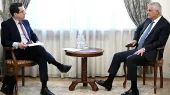
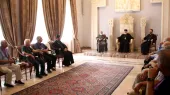
The quality of Armenia's response is crucial here. Baku has understood well that historical and cultural themes easily provoke emotional reactions within Armenian society. However, in the international arena, what matters is documented and verifiable evidence, not emotional responses. Archival materials, digitized manuscripts, accurate documentation of records, international scientific publications, and conferences organized with the participation of reputable experts are much more influential. The example of the Matenadaran was significant in this regard. The special representative of the European Union was presented with the Armenian manuscript heritage, the school of its preservation and restoration, as well as the work on the scientifically accurate preparation of replicas. This shifts the discussion to the realm of verifiable sources, material evidence, and professional scrutiny.
The Armenian response should be built on this same logic: international conferences, traveling exhibitions, multilingual catalogs, open digital repositories of records, joint research with Western universities, and high-quality digitization of manuscripts and monuments. This work does not need the language of state propaganda. The Matenadaran, universities, research centers, the Armenian Apostolic Church, museums, and academic and cultural institutions of the Diaspora can be more convincing. In such platforms, Armenian heritage is presented in its natural strength—through documents, primary sources, professional authority, and international scientific participation.
The most important feature of the new situation is precisely this. Outside the military border, a long-term political and ideological struggle is forming around memory, cultural belonging, and historical rights. The new working group from Baku is yet another manifestation of the institutionalization of that process.
In this field, the strongest arguments are preserved in archives, records of monuments, memorial books of manuscripts, and international scientific platforms. The latest episode of Gandzasar once again demonstrated the value of institutions like the Matenadaran. Political narratives can change, be rephrased, and disseminated, but a reliable image of historical heritage is ultimately built on documents, primary sources, and professional scientific work.
* This text was automatically translated by Artificial Intelligence (AI).


 ENGLISH